
International payments have become an essential part of modern life and business. Individuals send money to family members abroad, freelancers receive payments from overseas clients, while companies pay international suppliers, contractors, and service providers.
At the same time, traditional international transfers can involve multiple banks, currency conversions, intermediary fees, and processing delays. Modern financial technology is changing this process by making cross-border payments more transparent and easier to track.
One example is https://www.dapsypay.com/, a cross-border payments platform designed to help individuals and businesses send, receive, and manage international payments.
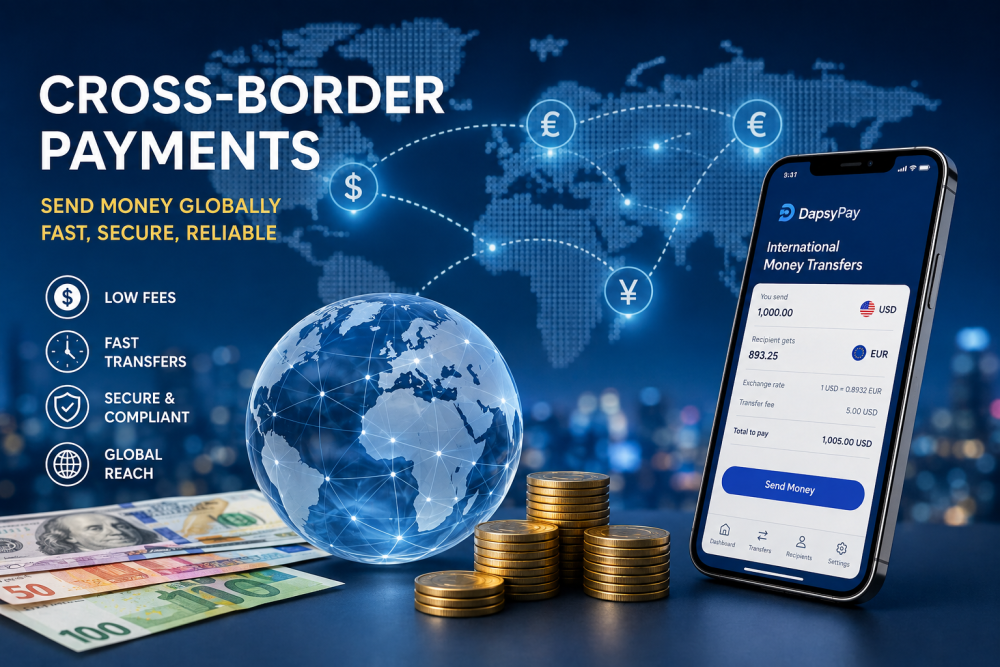
What Are Cross-Border Payments?
A cross-border payment is a financial transaction in which the sender and recipient are located in different countries. These transactions can be used for personal transfers as well as commercial purposes.
Common examples include:
- sending money to relatives living abroad;
- paying international suppliers;
- receiving payments from overseas customers;
- paying freelancers and remote employees;
- settling international invoices;
- paying for education or services in another country;
- transferring funds between business accounts in different markets.
The process can be more complicated than a domestic transfer because different currencies, banking systems, financial regulations, and payment networks may be involved.
Why International Money Transfers Can Be Complicated
Traditional international bank transfers may pass through several institutions before reaching the recipient. Depending on the countries and currencies involved, a transaction can include the sending bank, correspondent banks, a currency conversion provider, and the recipient's financial institution.
Each additional step can affect the speed and final cost of a transfer.
Common challenges include:
Transfer Fees
International payments may involve a sending fee, currency conversion costs, and intermediary bank charges. The total cost is therefore not always obvious when the transaction is initiated.
Currency Conversion
When the sender and recipient use different currencies, the exchange rate can significantly affect the amount received. Even a small difference in the exchange rate can become important when businesses make frequent or high-value transactions.
Processing Times
Some international bank transfers can take several business days. This may create problems when a supplier needs to be paid quickly or when a freelancer depends on an international payment for regular income.
Limited Payment Visibility
With traditional payment channels, tracking an international transfer can sometimes be difficult. Businesses may need to contact banks or wait for confirmation before knowing exactly where a payment is in the process.
What Should You Compare When Choosing an International Payment Service?
The cheapest advertised transfer fee does not necessarily mean the transaction is the least expensive. A better approach is to compare the total cost and practical features of each service.
Exchange Rates
Look at the actual exchange rate offered rather than focusing only on the advertised transaction fee. A lower fee can be offset by a less favorable exchange rate.
Transfer Fees
Check whether the service charges a fixed fee, a percentage of the transaction, or both. Also determine whether additional intermediary or receiving-bank charges may apply.
Transfer Speed
If timing is important, check the expected processing time before initiating a payment. The speed can vary depending on the currencies, countries, payment rails, compliance checks, and banking institutions involved.
Supported Currencies and Countries
A service may support international payments but not necessarily every country or currency. Confirm that the destination and required currency are supported before opening an account or starting a transfer.
Transaction Tracking
Real-time or near-real-time status updates can make it easier to manage international payments, particularly for businesses that process multiple transactions.
Security and Compliance
Financial services should use appropriate identity verification, fraud prevention, transaction monitoring, and data security measures. Users should also understand the verification requirements before making a transfer.
How Modern Payment Platforms Work
Fintech payment platforms are designed to simplify some of the processes traditionally associated with international transfers.
A typical process may involve creating an account, completing identity or business verification, entering the payment details, reviewing the exchange rate and fees, funding the transaction, and tracking its progress.
For example, DapsyPay describes a process that includes account creation, KYC/KYB verification where required, obtaining a quote, funding the transfer, and tracking the payment until delivery.
The platform offers services for both personal remittances and business payments, including supplier and invoice payments. It also provides multi-currency collection and payout infrastructure for businesses in supported markets.
International Payments for Businesses
Cross-border payments are particularly important for companies operating internationally.
An ecommerce business may need to pay manufacturers in another country. A consulting company may receive invoices from overseas contractors. An importer may need to pay suppliers before goods are shipped. A technology company may have employees or service providers in several countries.
In each situation, payment efficiency can directly affect cash flow.
Businesses should therefore consider:
- how quickly suppliers receive funds;
- the total cost of currency conversion;
- transaction limits;
- supported currencies;
- payment tracking;
- reconciliation and record keeping;
- compliance requirements.
A reliable payment process can help companies reduce administrative work and make international transactions more predictable.
Managing Multi-Currency Business Payments
Companies working across several markets may receive money in one currency while making payments in another. Managing these flows manually through multiple bank accounts can create additional administrative complexity.
Multi-currency payment infrastructure can help businesses organize collections and payouts in supported currencies.
DapsyPay currently describes wallet-as-a-service capabilities supporting currencies including CAD, USD, EUR, BRL, GBP, and MXN, with collection and payout functionality for supported markets.
For international businesses, the ability to manage different currencies through a coordinated payment workflow can simplify settlement and reconciliation.
Sending Money to Family Abroad
Cross-border payments are not limited to companies.
Millions of people regularly send money to relatives and friends in other countries. These transfers may be used for everyday living expenses, education, medical costs, housing, or financial support.
For personal remittances, the most important considerations are usually:
- How much will the recipient actually receive?
- What exchange rate is being used?
- What fees will be charged?
- How long will the transfer take?
- Is the destination country supported?
- Can the transfer be tracked?
Comparing these factors before sending money can help avoid unexpected costs.
Compliance and Identity Verification
International financial services operate within regulatory frameworks designed to reduce fraud, money laundering, and other financial crimes.
As a result, users may be required to complete identity verification before sending or receiving certain payments. Businesses may also need to provide company information and documentation as part of KYB procedures.
These checks can sometimes add an extra step to the onboarding process, but they are an important part of operating a compliant financial service.
Users should provide accurate information and make sure that international transfers comply with the laws and regulations applicable in both the sending and receiving countries.
How to Make International Transfers More Efficient
A few practical habits can make cross-border payments easier to manage.
Compare the Total Cost
Do not compare services based solely on the advertised transfer fee. Consider the exchange rate, possible intermediary charges, and the amount the recipient will actually receive.
Plan Regular Payments
Businesses that pay overseas suppliers or contractors regularly can benefit from establishing a consistent payment workflow rather than treating every transfer as a separate administrative task.
Check Recipient Information Carefully
Incorrect names, account numbers, routing information, or other payment details can cause delays. Always verify the recipient's information before confirming a transaction.
Keep Payment Records
Maintain invoices, transfer confirmations, and transaction records for accounting and tax purposes. Businesses should make sure their international payment records can be reconciled with their financial accounts.
Consider Transfer Timing
Urgent payments should be initiated with enough time to account for weekends, holidays, compliance reviews, and differences between banking systems.
The Future of Cross-Border Payments
International payments are becoming increasingly connected to digital financial infrastructure. Businesses and consumers expect faster transfers, clearer pricing, better tracking, and simpler interfaces.
Modern platforms are also expanding beyond basic money transfers. Payment infrastructure can include multi-currency wallets, business collections, supplier payments, invoice settlement, and international payouts.
Stablecoin and blockchain-based settlement technologies are another development in the sector. These technologies can potentially reduce some of the friction associated with moving value between different financial systems, although their availability, regulatory treatment, and practical usefulness vary by country and transaction type.
The most important trend is not simply speed. A modern international payment service needs to balance speed with security, compliance, transparent pricing, and reliable delivery.
Why Payment Transparency Matters
Transparency is particularly important when money crosses borders.
Before confirming a transfer, users should ideally know:
- the amount being sent;
- the exchange rate;
- applicable fees;
- the expected amount received;
- the destination currency;
- the estimated delivery time;
- any verification requirements.
Having this information upfront makes it easier to compare services and plan personal or business finances.
For companies, transparency is even more important because repeated small differences in exchange rates and transaction costs can have a meaningful impact on annual operating expenses.
Choosing the Right Cross-Border Payment Solution
There is no universal payment method that is ideal for every transaction. The right option depends on the destination country, currency, transaction size, frequency, urgency, and whether the payment is personal or commercial.
Banks can remain useful for certain transactions, particularly when businesses already have established international banking relationships. Money transfer services can be convenient for personal remittances, while specialized fintech platforms may provide additional tools for businesses managing frequent international payments.
Before choosing a service, compare its supported markets, pricing, exchange rates, payment speed, security measures, verification requirements, and tracking capabilities.
Cross-border payments are an essential part of the global economy, but traditional international transfers can sometimes be slow, expensive, and difficult to track.
Modern payment platforms are helping individuals and businesses simplify international money movement through digital onboarding, transparent pricing, multi-currency capabilities, payment tracking, and specialized business payment services.
Whether you are sending money to family, receiving payments from international clients, paying overseas suppliers, or managing multiple currencies for a growing business, comparing the available payment options can help you find a solution that fits your needs.
DapsyPay is one example of a modern platform focused on international money transfers, cross-border business payments, multi-currency collections and payouts, and related financial services.